

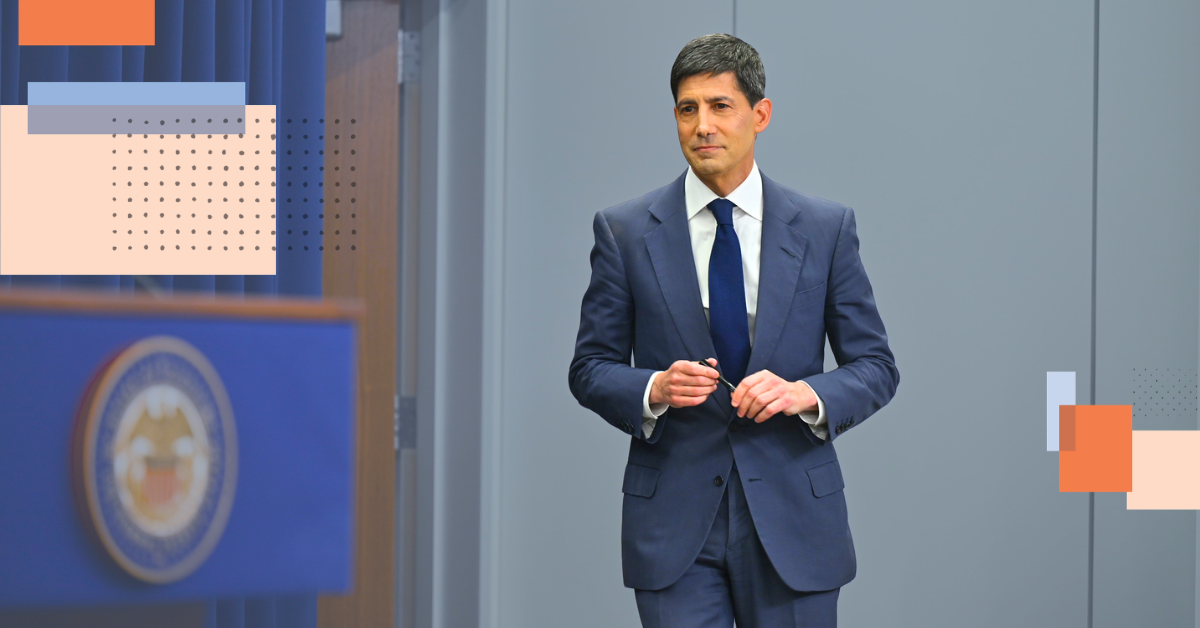
How New Fed Chair Warsh’s Challenges and Choices Could Shape Markets
James Zahansky, AWMA®
Senior Managing Partner, Chief Strategist
SUMMARY: The Federal Reserve’s dual mandate is to maximize employment while maintaining stable prices, creating a challenge for new Chair Kevin Warsh as slowing job growth points toward rate cuts while persistent inflation limits that option. Warsh appears focused on returning inflation to the Fed’s 2% target and is expected to provide less commentary and forward guidance than his predecessors, potentially increasing market volatility. He has also formed five task forces to review the Fed’s communication, balance sheet, data quality, inflation, and technology’s impact on productivity and employment.
The new Chairman of the Federal Reserve Kevin Warsh faces a tough task. He oversees the Fed at a time when employment growth may be slowing, and President Trump would like to see lower interest rates.
The problem: inflation remains elevated, boosted by tariffs, oil prices, and strong spending on artificial intelligence (AI). It’s quite a challenging position for the Fed’s new leader.
Let’s take a look at the tricky market environment he’s facing and the new leadership style he’s bringing to the job.
Employment’s Solid, But May Be Slowing
The Federal Reserve has two separate but equal mandates: one is to ensure stable prices and the other is to maximize employment.
In June, the number of new jobs added to employers’ payrolls slowed markedly to 57,000, roughly half the 129,000 jobs added in May. Some analysts fear we’re starting to see companies use AI to replace employees.
The broad economy may also be slowing. In the first quarter, the economy, as measured by GDP, grew 2.1%, but the Atlanta Fed’s estimates second quarter GDP will dip to 1.3%.
Relatively high interest rates have restrained economic growth by making it expensive to buy a home or a car. The yield on the 10-year Treasury has risen from a low of 0.52% in July of 2020 to a recent 4.5%. The Treasury rate directly affects interest rates on all other loans, including the 30-year mortgage interest rate, which has more than doubled from roughly 3% in 2021 to 6.4% recently. As a result, the number of pre-existing homes purchased has fallen by half since the low-rate environment of 2020-2022.
Inflation Remains Elevated
With the economy decelerating, Federal Reserve officials might normally cut interest rates. But right now, their hands may be tied because of the Fed’s second mandate, to ensure stable prices. Inflation has remained well above the Federal Reserve’s 2% target and on the rise for the past year.
First, inflation accelerated because of President Trump’s tariffs. But analysts expected tariffs would have a one-time impact that would fade over time. Then oil prices rose due to the Iran conflict. The impact of higher oil prices was also expected to fade as both sides agreed to a truce and oil prices tumbled. Fighting recently reignited and, if it’s sustained, could lead to higher oil prices once again.
Most recently, Fed officials have grown concerned that the AI boom has sparked inflation. Companies are spending billions of dollars to build data centers filled with computing equipment to run AI programs. The ripple effects have been widespread. AI-related spending has boosted demand for steel and electric generators, semiconductor chips and wiring, as well as the construction crews to build the facilities.
The Fed’s preferred inflation gauge has been running near 4%, twice its inflation target. Time may be up for those waiting to see if pricing pressures are transitory. At a recent conference, Chair Warsh said, “If there were people in households, the business sector, the financial markets, who thought that this central bank was gonna be comfortable with an inflation objective above 2%, I guess they'd be disappointed.”
His tough stance was welcomed by the markets after President Trump aggressively pushed the previous Fed Chair, Jerome Powell, to lower interest rates. Some feared that Warsh would do the President’s bidding. But so far, it looks like he’ll be forging his own path.
Understanding A New Communications Style
At Chairman Warsh’s first Fed meeting in June, the Fed’s short-term interest rate target was left unchanged at 3.5% to 3.75%, and 9 of 19 Fed officials indicated that they thought the Fed would increase rates at least one time before the end of the year. That was a sharp change from the prior meeting, when none of the Fed officials thought rates would increase by year-end.
In a departure from his predecessors, Chair Warsh did not opine on where interest rates would head over the course of the year, nor did the Fed provide any forward guidance. That too is the change from the Federal Reserve’s prior leadership.
The Warsh-led Fed also released a much briefer post-meeting statement than his predecessors and led a briefer post-meeting press conference. Some fear that if the Fed releases less information about its leaders’ thinking, future rate decisions will surprise the markets and lead to more volatility. Uncertainty and volatility could, in turn, lead to higher interest rates. Time will tell.
Additional changes may also be afoot. Warsh set up five task forces to evaluate how the Fed communicates, uses its balance sheet, the quality of its data, the impact of technology on productivity and jobs, and the drivers of inflation. It’s an ambitious agenda for the economy’s new sheriff.
At WHZ, we’ll keep tabs on changes at the Federal Reserve as we continuously evaluate where markets are heading. Schedule a discovery session with us or call 860-928-2341 to see how we can help you and your family move forward with Absolute Confidence, Unwavering Partnership, For Life.
Authored by James Zahansky, AWMA®. AI may have been used in the research and initial drafting of this piece. Securities and advisory services offered through Commonwealth Financial Network®, Member FINRA/SIPC, a Registered Investment Adviser. 697 Pomfret Street, Pomfret Center, CT 06259 and 392-A Merrow Road, Tolland, CT 06084, 860.928.2341. www.whzwealth.com. These materials are general in nature and do not address your specific situation. For your specific investment needs, please discuss your individual circumstances with your financial advisor. WHZ Strategic Wealth Advisors does not provide tax or legal advice, and nothing in the accompanying pages should be construed as specific tax or legal advice.
Frequently Asked Questions
What challenges does Federal Reserve Chair Kevin Warsh face?
Kevin Warsh must balance the Federal Reserve’s dual mandate of maintaining stable prices and supporting maximum employment. Slowing job growth may support lower interest rates, while persistent inflation may require rates to remain elevated or increase.
How could Kevin Warsh’s policies affect financial markets?
Warsh’s decisions on interest rates, inflation, and the Fed’s balance sheet could affect stock and bond prices, Treasury yields, mortgage rates, borrowing costs, and overall market volatility.
Will the Federal Reserve lower interest rates under Kevin Warsh?
Rate cuts will depend on inflation, employment, economic growth, and other financial data. Although slower economic and job growth could support cuts, inflation remaining above the Fed’s 2% target may limit its ability to reduce rates.
Why is inflation still a concern for the Federal Reserve?
Inflationary pressure may be coming from tariffs, energy prices, consumer spending, and increased demand for materials, equipment, electricity, and labor associated with AI infrastructure and data-center construction.
How does the Federal Reserve’s dual mandate influence interest-rate decisions?
The Fed must pursue both maximum employment and stable prices. When employment weakens but inflation remains high, those goals can conflict and make interest-rate decisions more difficult.
Could Warsh’s communication style increase market volatility?
Possibly. Providing less forward guidance and fewer public comments may make future Fed decisions harder for investors to anticipate, potentially producing larger market reactions when policies change.
What are Kevin Warsh’s five Federal Reserve task forces reviewing?
The task forces are evaluating the Fed’s communication practices, balance-sheet policies, data quality, inflation drivers, and technology’s effects on employment and productivity.
How do Federal Reserve interest rates affect consumers?
Fed policy can influence mortgage rates, auto loans, credit cards, business financing, savings yields, and other borrowing costs, although these rates do not always move in direct proportion to the federal funds rate.
What does the Federal Reserve’s 2% inflation target mean?
The Fed considers inflation averaging around 2% over time to be consistent with price stability. Inflation substantially above that level reduces purchasing power and may prompt the Fed to maintain tighter monetary policy.
How should investors respond to uncertainty surrounding Federal Reserve policy?
Investors should generally avoid making portfolio decisions based solely on predictions about the Fed’s next move. A diversified investment strategy aligned with long-term goals, risk tolerance, and financial needs may provide a more disciplined framework during volatile markets.