

Iran War Has Markets Volatile, But It’s Not The First Time
Leisl L. Langevin, CFP®, CDFA®
Managing Partner, Advisory
SUMMARY:
The war in Iran is affecting markets through higher oil prices, renewed inflation concerns, and increased uncertainty for investors. Disruptions in the Strait of Hormuz can ripple through the global economy by raising the cost of energy and other essential materials, which can pressure consumer spending, corporate profits, interest rates, and stock prices.
At the same time, history tells us that wars, crises, and market shocks are unsettling, but they are not unusual, and markets have historically recovered over time. The core lesson for investors is that trying to predict the exact bottom or jump in and out of the market often does more harm than good. Long-term discipline, diversification, and a portfolio aligned with risk tolerance remain the most reliable response during periods of geopolitical turmoil.
Watch the companion video
The war in Iran has sent stocks tumbling on fears about the availability of oil and inflation. Yet, every once in a while, a piece of news sparks optimism that the war will end sooner rather than later, and the stock market rallies. So far, rallies have been short-lived. But they remind us of two important lessons.
First, history is littered with wars and periods of uncertainty, and they always come to an end.
Second, it’s impossible to predict when the stock market will rebound, but we do know that investors who try to time the market have historically underperformed those who remain invested over the long run.
Consider these results based on a $1,000 investment in the S&P 500 made 25 years ago. The portfolio that remained invested in the market the entire time grew to $5,989. If the portfolio was out of the stock market during its five best days over those 25 years, the portfolio only grew to $3,701. If the portfolio was out of the market during the market’s best 30 days over the 25-year period, it actually shrank to $997.
It’s a mathematical reminder that long-term investors who stay the course are rewarded. And it’s why we at WHZ work with investors to craft a diversified portfolio that reflects their risk tolerance and helps them remain confident about investing in the stock markets during the good times and the bad.
Reminders To Focus On The Long Run
Watching the war in Iran unfold on the nightly news is unsettling, to say the least. First and foremost, we should all be concerned about the human cost.
But the war has also raised concerns about energy security and inflation because the Iranians have threatened to bomb any ship that sails through the Strait of Hormuz. Shipping traffic has largely ground to a halt, preventing Middle Eastern countries from delivering the goods they produce to the rest of the world. This includes 20% of the world’s oil, liquified natural gas, fertilizer, aluminum, helium, and other materials.
read more below

get started on living well
Subscribe to the Fearless Flyer
Get the financial tips and insights you need to fearlessly pursue your goals, plus access to subscriber-only benefits like our Tax Resource Center and more.
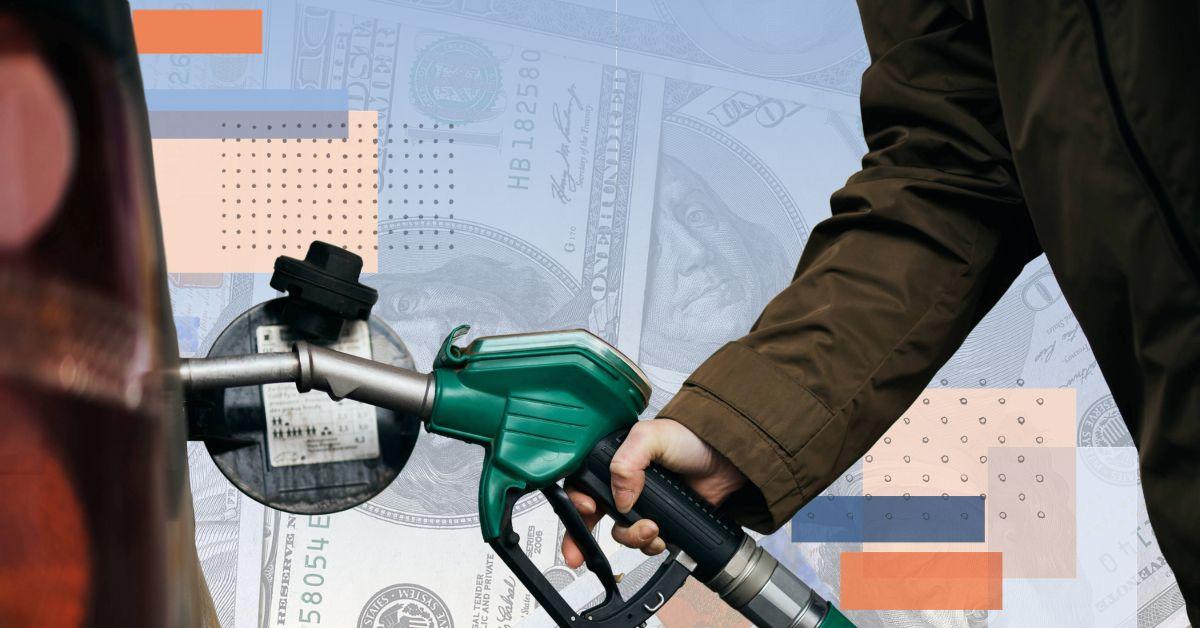
As supplies of these products fall, their prices rise. The price of oil, for example, jumped more than 50% in March. The ripple effects have been felt globally because the exports from the Middle East are used to produce many other goods. Natural gas is used to make the electricity that powers homes and factories. Cars and soda cans contain aluminum. Farmers use fertilizer to help crops grow. Helium is necessary to manufacture semiconductors. And, of course, oil is refined into gasoline, the price of which has climbed by more than a third in March.
We may not see a repeat of the 1970s, when the US was far more dependent on imported oil than it is today. But the longer the blockade of the Strait continues, the stickier higher prices become, and the more inflation affects the broader economy. Consumers may have less disposable income for purchases, corporate profits could fall, and interest rates may rise. None of this is good news for the stock market, which has declined roughly 5% from its January peak.
But amid all this doom and gloom, every once in a while, a piece of news sparks optimism that the war will end sooner rather than later, and the stock market rallies. So far, rallies have been short-lived. But that’s where those lessons mentioned earlier come into play:
- One, history is littered with wars and periods of uncertainty, and they always come to an end.
- And two, it’s impossible to predict when the stock market will rebound, but we do know that investors who try to time the market have historically underperformed those who remain invested over the long run.
That is to say, we don’t know how long the Iran war will last, but it will end at some point. Investors are best served by working with their financial advisors to craft a diversified portfolio and remaining invested during the good times and the bad.
Here’s a look at market crises throughout history and why it’s important to remain invested.
As We Look Forward, It’s Helpful To Look Back
President Trump has said the Iran war will be over in a matter of weeks, and we hope he’s right. But some wars have lasted for months, and others have lasted for decades. What’s true of all wars and crises is that they are not unusual. They’ve existed throughout history, sparking stock market corrections and bear markets. But inevitably, the problem is resolved, and the stock market rebounds.
Since 2000, we’ve lived through 10 extremely negative events that spooked the stock markets. That’s roughly one crisis every 2.5 years. There was 9/11, the Second Gulf War, the bursting of the technology bubble, the global financial crisis, a global pandemic, President Trump’s tariffs, and now the Iran war – just in the past 25 years! Nonetheless, the S&P 500 has risen 350% since January 1, 2000, for a 14% annual return.
Periods of uncertainty and market volatility are a fact of life. Looking back to 1954, the S&P 500 has declined by 10% or more about once every 18 months. It’s declined 15% or more once every three years, and by 20% or more once every six years. The market may fall in response to moments of crisis, but over the long run, it heads higher.
Why Trying to Time The Market Is A Bad Idea
Market corrections are unsettling because it’s almost impossible to predict when they will start or when they will end. Investors trying to time the market need to make two perfect decisions: when to exit the market and when to jump back in.
Investors who try to time the market and miss the market’s biggest rallies can seriously hurt their portfolio’s returns. Consider these results based on a $1,000 investment in the S&P 500 made 25 years ago. The portfolio that remained invested in the market the entire time grew to $5,989. If the portfolio was out of the stock market during its five best days over those 25 years, the portfolio only grew to $3,701. If the portfolio was out of the market during the market’s best 30 days over the 25-year period, it actually shrank to $997. It’s a mathematical reminder that long-term investors who stay the course are rewarded.
At WHZ, we consistently work with our clients to ensure their investment portfolios reflect their risk tolerance and are well diversified. By doing so, clients can be reassured that investment portfolios are appropriately positioned when unexpected global events cause market disruptions and when bull markets resume. Our goal is to provide you with Absolute Confidence. Unwavering Partnership. For Life. Call us at (860) 928-2341 or schedule a complimentary discovery session now with our team.
Authored by WHZ Managing Partner, Advisory Leisl L. Langevin CFP® CDFA®. Investments are subject to risk, including the loss of principal. Past performance is no guarantee of future results. Securities and advisory services offered through Commonwealth Financial Network®, Member FINRA/SIPC, a Registered Investment Adviser. 697 Pomfret Street, Pomfret Center, CT 06259 and 392-A Merrow Road, Tolland, CT 06084, 860.928.2341. http://www.whzwealth.com. These materials are general in nature and do not address your specific situation. For your specific investment needs, please discuss your individual circumstances with your financial advisor. WHZ Strategic Wealth Advisors does not provide tax or legal advice, and nothing in the accompanying pages should be construed as specific tax or legal advice.
RELATED FAQ's
1. How is the war in Iran affecting financial markets?
The article explains that the conflict has increased fears around oil supply disruptions, inflation, and economic instability, all of which have contributed to stock market volatility.
2. Why does the Strait of Hormuz matter so much to investors?
Because a large share of the world’s oil and other key materials moves through it. If shipping is disrupted, supplies can tighten, prices can rise, and those increases can spread through the broader economy.
3. Why do higher oil prices hurt the stock market?
Higher oil prices can push inflation higher, reduce consumer purchasing power, squeeze corporate profit margins, and increase the likelihood of higher interest rates, all of which can weigh on stocks.
4. What historical lesson does the article emphasize for investors?
The article stresses that wars and market crises eventually end, and that markets have historically recovered over time even after severe periods of uncertainty.
5. Why is trying to time the market risky during a crisis?
Because investors have to make two correct decisions: when to get out and when to get back in. Missing even a small number of the market’s best days can significantly reduce long-term returns.
6. What does the S&P 500 show about investments during wars?
It shows that a $1,000 investment left fully invested over 25 years grew substantially, while missing only the market’s best few days dramatically reduced returns. Missing the best 30 days caused the investment to shrink instead of grow.
7. What should investors do during geopolitical uncertainty?
The article recommends staying focused on the long term, maintaining diversification, and working from a portfolio strategy that reflects personal risk tolerance rather than reacting emotionally to headlines.
8. Is the article saying investors should ignore world events?
No. It acknowledges that these events are serious and can move markets meaningfully, but argues that investment decisions should still be grounded in discipline and long-term planning rather than fear-driven reaction.
You & Your Money Podcast
Tune in for market updates and financial tips to help you Plan Well, Invest Well and Live Well.
WHZ on YouTube
Quick Tip videos designed to empower you to reach your financial life goals.